
Quick answer: what does the ISPS Code require?
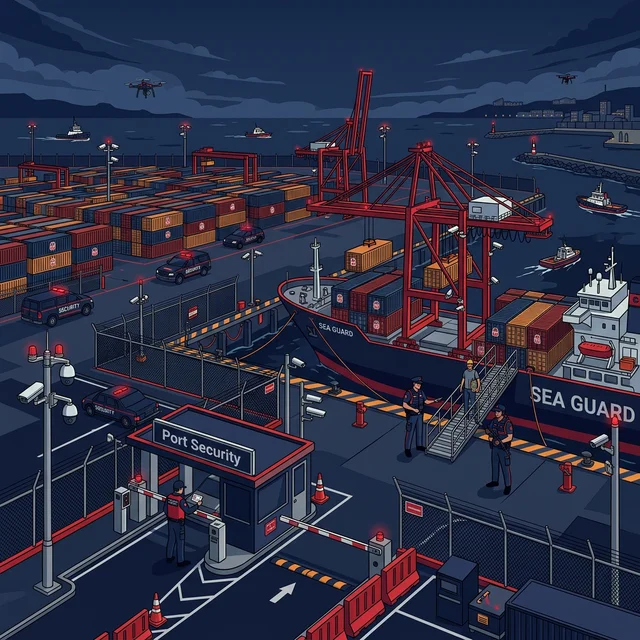
The ISPS Code requires ships and port facilities to assess security risks, maintain approved security plans, assign responsible officers and apply measures by security level.
- Ship security plans define access control, restricted areas, monitoring, drills and records.
- CSO, SSO and PFSO roles connect company, ship and port facility actions.
- Modern plans should align physical security with cyber security procedures and incident reporting.
Following the tragic events of September 11, 2001, the international community recognized that the global maritime transport sector was highly vulnerable to terrorist attacks. A ship could be hijacked and used as a weapon, or illicit cargo (like weapons of mass destruction) could be smuggled through major ports. In response, the International Maritime Organization (IMO) rapidly drafted and implemented the International Ship and Port Facility Security (ISPS) Code in 2004.
While the ISM Code focuses on Safety (preventing accidents and unintentional harm), the ISPS Code strictly focuses on Security (preventing intentional, malicious acts like terrorism, piracy, and smuggling).
The 3 Security Levels
The core mechanism of the ISPS Code is the escalating Security Level system. Both ships and port facilities must operate at one of three levels, dictated by the contracting government of the vessel's flag state or the port facility's location.
- Security Level 1 (Normal): Minimum appropriate protective security measures are maintained at all times. Standard ID checks, routine baggage screening, and basic access control.
- Security Level 2 (Heightened): Appropriate additional protective measures are maintained for a period of time due to a heightened risk of a security incident. Increased patrols, stricter access controls, and possible escorts for visitors.
- Security Level 3 (Exceptional): Further specific protective measures applied when a security incident is probable or imminent. Shore leave is suspended, all cargo operations may cease, and the port/ship is effectively locked down.
Key Security Personnel
To implement the Code effectively, specific roles were created with clearly defined responsibilities:
1. Ship Security Officer (SSO)
An appointed officer onboard (often the Chief Mate or 2nd Officer) accountable directly to the Master. They are responsible for conducting regular security inspections, implementing the Ship Security Plan, and coordinating with port facilities.
2. Company Security Officer (CSO)
A designated person working in the shipping company's shore office. They are responsible for ensuring a Ship Security Assessment (SSA) is carried out and for developing and maintaining the Ship Security Plan (SSP). They also ensure the SSO has adequate resources to maintain security.
3. Port Facility Security Officer (PFSO)
The counterpart to the SSO, located at the port terminal. The PFSO oversees the security of the terminal and acts as the point of contact for approaching ships to issue a Declaration of Security (DoS).
The Ship Security Plan (SSP)
Every vessel must carry a highly confidential Ship Security Plan (SSP) approved by its Flag State. This plan outlines exactly how the ship will respond at each of the 3 Security Levels. It details:
- Restricted areas on board (e.g., the bridge, engine room) and how access is controlled.
- Procedures for responding to security threats or breaches.
- Locations and operation of the Ship Security Alert System (SSAS) - a silent panic button that alerts the shipping company and flag state of an attack without notifying the attackers on board.
- Evacuation and lockdown procedures.
Unlike safety manuals, the SSP is strictly confidential. Port State Control inspectors can verify its existence and approval, but they are generally not permitted to read its operational details without immense justification.
Sources and verification
Use these references as the starting point for verification; always follow current flag-state, company, port, and approved shipboard documents for operational decisions.
Focus on Security, Not Spreadsheets
When you are appointed as the SSO, your focus must be on gangway watch, crew training, and perimeter monitoring. While you handle the critical security patrols, let CaptainCalc handle your intensive navigational math and stability paperwork automatically.